September 22, 2026 Post by : Editorial Evening Reflections
The Case for Watching the Same Valley Every Evening
Every valley photographer has a drawer of failed evenings. You drove out, set up, waited, and got nothing — a flat gray sky, a valley drained of color, a sunset that never quite happened. It's tempting to call it bad luck. Most of the time, it's readable weather, and learning to read it turns guesswork into something closer to a practice.
The goal isn't to predict perfect sunsets. It's to understand which evenings are worth the drive and which ones are better spent planning the next one.
The Ingredients of a Good Evening
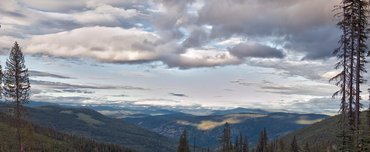
Clear skies sound ideal but often produce the least interesting valley light. A sky with no clouds gives you a clean gradient and nothing else — pretty, but thin. What you want is broken cloud: enough texture to catch color, enough gaps to let light through. High, thin clouds are the best canvas. Low, thick overcast is usually a washout.
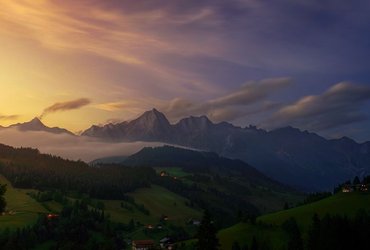
Haze matters too, and it's underrated. A little atmospheric haze in a valley softens distant ridges, layers them into pastel bands, and stretches warm light across the scene. Too much haze and everything goes milky. The sweet spot is a day or two after rain, when the air has settled but hasn't fully cleared.
Wind is the quiet killer. A breezy evening ruins reflections, rattles tripods, and moves foreground grass during long exposures. If the forecast shows steady wind, plan for a sheltered valley or a composition that doesn't depend on stillness.
Reading the Sky an Hour Ahead
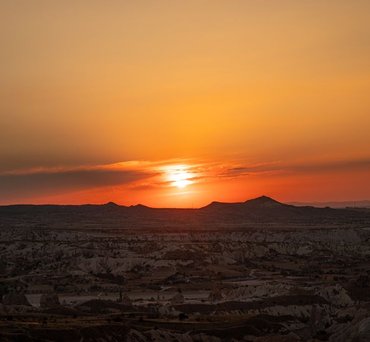
An hour before sunset, look west. If you can see a clean horizon under a solid cloud deck, the light will likely die behind that deck before it reaches the valley. If the western sky has gaps and the clouds above you are textured and separate, you're in business. The color usually appears in the last fifteen minutes and the afterglow — so don't judge the evening too early.
The most useful habit is a simple log. Note the conditions, what you expected, and what actually happened. After a season of evenings, you'll have your own local forecast — one that no app can give you, because it's calibrated to your valley, your angles, and your eye.
Failed evenings aren't wasted. They're the tuition. Pay attention, and eventually you'll drive out only when the sky is actually going to pay you back.


Author

22 feb,2025
This incident opened my eyes to the value of Insurance in general, so I decided to examine my personal and business insurance.


Comment (3)
The payments are made directly from one person to another without passing through a central bank or clearing house.
22 feb,2025
ReplyWhy Some Evenings Fail: Reading Weather, Haze, and Clouds for Better Valley Sunsets
23 feb,2025
ReplyThe Long Shadow Hour: Watching a Valley Close Its Eyes
23 feb,2025
Reply